ISO Class 5 or Grade B? A comparison of the main cleanroom classification systems, ISO 14644-1, EU GMP Annex 1, PIC/S and the FDA , with extensive sourcing.
Article content
There isn't one single "cleanroom standard" — there's a cluster of overlapping systems: the international ISO 14644-1 standard counts particles per cubic metre, the European GMP Annex 1 uses the letters A through D for pharmaceutical production, and in the United States the officially withdrawn but still widely used "Class 100" terminology persists. This article lines up the main systems side by side, citing the official texts from ISO, the European Commission, PIC/S and the FDA.
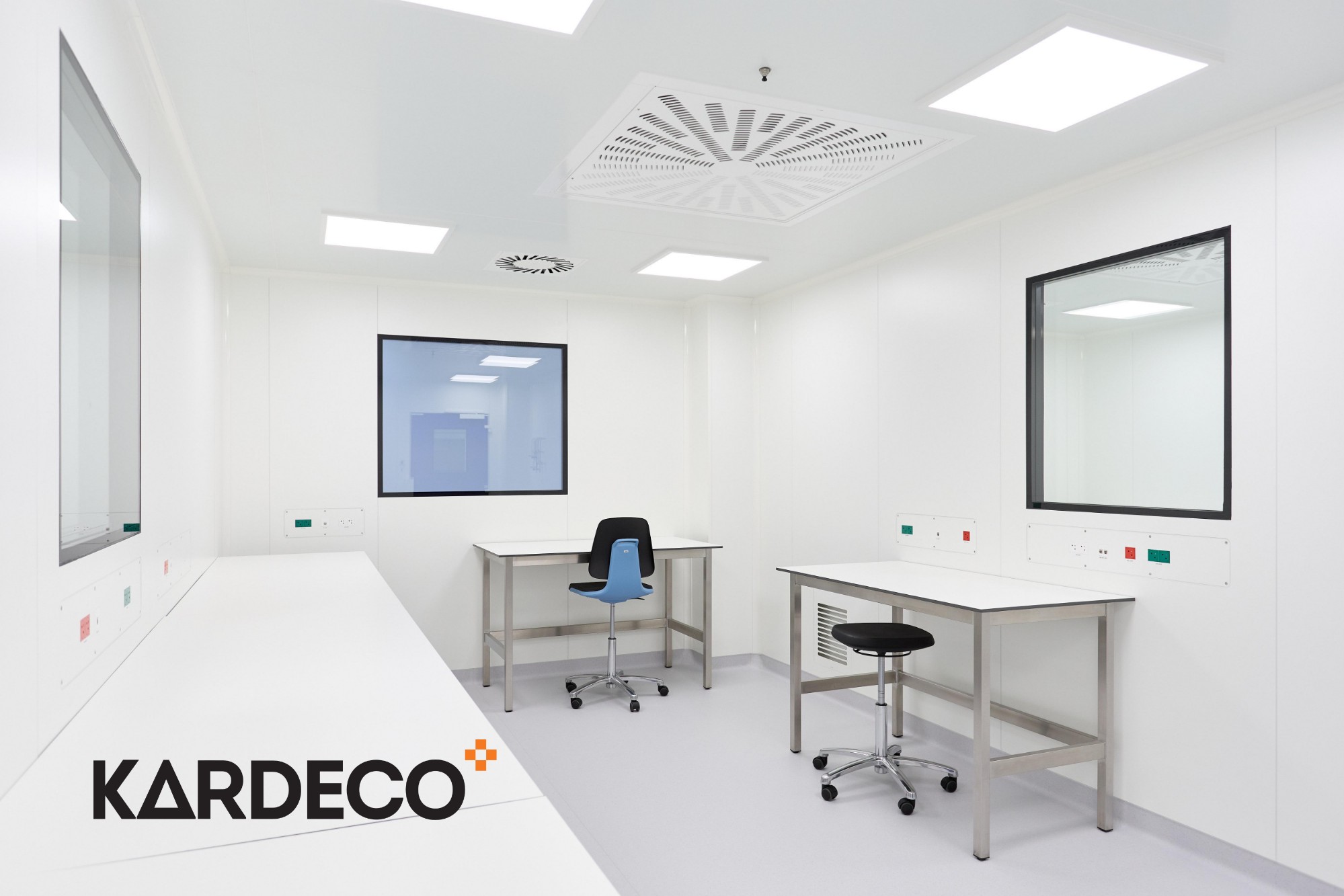
Anyone encountering cleanrooms for the first time quickly runs into a naming muddle. One standard talks about "ISO Class 7," another about "Grade C," a third about "Class 10,000" ,and these are often the very same air quality, expressed through different classification systems that developed alongside one another. That overview is more than a matter of vocabulary: a room's grade determines its ventilation requirements, gowning rules, monitoring frequency, and ultimately how a workstation within that room is designed. This article lines up the main, publicly accessible classification systems, each with a link back to the original, non-commercial source.
Where it started: from Whitfield to Federal Standard 209E
The modern cleanroom concept is credited to American physicist Willis Whitfield, who from 1958 worked at Sandia Corporation (today Sandia National Laboratories) on contamination problems affecting the manufacture of electromechanical switches. On 28 December 1960 he recorded a design that inverted the problem: instead of keeping contamination out, he had filtered air flow continuously and unidirectionally through the room, so particles were constantly carried away rather than allowed to accumulate. A first prototype was running by November 1961 and measured roughly 750 dust particles per cubic foot — about a thousand times cleaner than the rooms in use at the time [1]. That basic principle — air moving evenly through the room via filters rather than circulating, still underlies almost every cleanroom today, and was adopted by, among others, the semiconductor and pharmaceutical industries, NASA, and hospitals (the first operating room built on this principle dates to January 1966) [1].
Building on that principle, the first Federal Standard 209 appeared in December 1963, establishing three cleanliness classes and introducing the term "Class 100" for laminar airflow [1]. Later revisions, up to and including Federal Standard 209E , remained the American reference, with the familiar designations "Class 100," "Class 1,000," "Class 10,000" and "Class 100,000": the number of particles 0.5 µm or larger permitted per cubic foot of air. That standard is now history: on the recommendation of Working Group CC100 of the Institute of Environmental Sciences and Technology (IEST), the body designated by the GSA as the "Preparing Activity" for this standard, the U.S. General Services Administration (GSA) officially cancelled Federal Standard 209E on 29 November 2001, in favour of the international ISO 14644 series (developed by ISO/TC 209) [2]. Even so, the old terminology still surfaces in practice, including in more recent U.S. government documents (see below).
ISO 14644-1: the international benchmark for air cleanliness
The standard that internationally replaced Federal Standard 209E is ISO 14644-1, issued by the International Organization for Standardization. It classifies the air cleanliness of a space based on the concentration of airborne particles of different sizes, measured with an optical particle counter (a light-scattering airborne particle counter) [3]. The standard distinguishes nine classes, from ISO Class 1 (an extremely low particle count, used in, for example, the semiconductor industry) to ISO Class 9 (comparable to ordinary indoor air).
Particle limits by ISO class (maximum particles per cubic metre, by particle size) [4]:
- ISO 3 — ≥0.1 µm: 1,000; ≥0.3 µm: 102; ≥0.5 µm: 35
- ISO 4 — ≥0.1 µm: 10,000; ≥0.3 µm: 1,020; ≥0.5 µm: 352; ≥1 µm: 83
- ISO 5 — ≥0.1 µm: 100,000; ≥0.3 µm: 10,200; ≥0.5 µm: 3,520; ≥1 µm: 832
- ISO 6 — ≥0.1 µm: 1,000,000; ≥0.3 µm: 102,000; ≥0.5 µm: 35,200; ≥1 µm: 8,320; ≥5 µm: 293
- ISO 7 — ≥0.5 µm: 352,000; ≥1 µm: 83,200; ≥5 µm: 2,930
- ISO 8 — ≥0.5 µm: 3,520,000; ≥1 µm: 832,000; ≥5 µm: 29,300
- ISO 9 — ≥0.5 µm: 35,200,000; ≥1 µm: 8,320,000; ≥5 µm: 293,000
A “—” means the concentration at that particle size is too high to be measured or classified meaningfully. For comparison: the old American Federal Standard 209E classes map directly onto these ISO classes, Class 100 corresponds to ISO Class 5, Class 1,000 to ISO Class 6, Class 10,000 to ISO Class 7, and Class 100,000 to ISO Class 8. Those four middle rows (ISO 5 through 8) are independently confirmed by the U.S. FDA, which uses exactly the same limit values for these classes in its own guidance [7].
EU GMP Annex 1: grades A through D for the pharmaceutical industry
For the manufacture of medicinal products, a plain ISO class is not enough: the European “Guidelines on Good Manufacturing Practice” (GMP), and specifically its Annex 1, impose their own classification using the letters A, B, C and D. This version of Annex 1 was published by the European Commission on 25 August 2022 (reference C(2022) 5938 final) and has been fully applicable since 25 August 2024 [5].
Annex 1 also draws a distinction that the ISO standard does not make by default: the status “at rest” (the room is operational but no one is working in it) versus “in operation” (production is actually taking place, with personnel present and equipment running). Both states carry separate limit values [5]:
Particle limits (maximum particles per cubic metre, at rest / in operation) [5]:
- Grade A — ≥0.5 µm at rest: 3,520; in operation: 3,520; ≥5 µm at rest: not specified; in operation: not specified
- Grade B — ≥0.5 µm at rest: 3,520; in operation: 352,000; ≥5 µm at rest: not specified; in operation: 2,930
- Grade C — ≥0.5 µm at rest: 352,000; in operation: 3,520,000; ≥5 µm at rest: 2,930; in operation: 29,300
- Grade D — ≥0.5 µm at rest: 3,520,000; in operation: not predetermined; ≥5 µm at rest: 29,300; in operation: not predetermined
Grade A is the critical zone for high-risk operations, for example, the filling zone of an aseptic line, the stopper bowl, or open primary packaging, and is typically protected locally by unidirectional airflow within an isolator or RABS system. Grade B is the background environment surrounding a non-isolated Grade A zone. Grades C and D are used for less critical stages of production, such as preparing solutions that will still be filtered [5].
Beyond particle concentrations, Annex 1 also sets microbiological limits, measured via active air sampling, settle plates and contact plates [5]:
- Grade A — Air: no growth; Settle plates (4h); Contact plates:
- Grade B — Air: 10; Settle plates (4h): 5; Contact plates: 5
- Grade C — Air: 100; Settle plates (4h): 50; Contact plates: 25
- Grade D — Air: 200; Settle plates (4h): 100; Contact plates: 50
PIC/S: the same limit values, applied worldwide
The European Annex 1 classification doesn't stand alone. The Pharmaceutical Inspection Co-operation Scheme (PIC/S), a partnership of medicines authorities from more than 50 countries worldwide, including countries outside the EU, applies an Annex 1 in its own GMP guide (PE 009) with an identical Grade A/B/C/D structure and the same particle and microbiological limit values [6]. That makes the A-to-D classification, in practice, an internationally accepted reference rather than a purely European matter.
The American angle: the FDA and a terminology that never quite disappeared
Even though Federal Standard 209E was officially withdrawn in 2001, the U.S. Food and Drug Administration (FDA) still uses the familiar terms alongside their ISO equivalents in its guidance "Sterile Drug Products Produced by Aseptic Processing, Current Good Manufacturing Practice" (originally 2004, last updated May 2020) [7]:
- Class 100 (ISO 5) — the critical zone where the sterile product is exposed
- Class 1,000 (ISO 6) — supporting clean area
- Class 10,000 (ISO 7) — minimum level for areas adjacent to the aseptic line
- Class 100,000 (ISO 8) — less critical activities
The FDA guidance also stresses that classification measurements should preferably be taken under dynamic conditions, that is, with personnel present and equipment running, since this gives a more realistic picture than a measurement in an empty, static room [7].
From standard to practice: what a grade means for the people who work there
Behind each of these numbers and letters lies a real consequence for the people working in the space: the stricter the grade, the stricter the gowning requirements, the higher the number of air changes per hour, and the more limited the freedom of movement needed to avoid turbulence, and therefore particle dispersion. This also has a direct impact on the workstation itself: furniture and equipment in a Grade B or ISO Class 5 environment must meet specific requirements for material, finish and cleanability, and the way a workstation is laid out can help determine how easily the prescribed airflow pattern is maintained. The classification of a room is therefore not just a matter for the quality department, it is also a starting point for designing the workstations that have to function within it.
Sources
- Sandia National Laboratories, "The Works of Willis Whitfield" (Giants of Sandia series), official historical publication about Willis Whitfield and the invention of the laminar-airflow cleanroom (design recorded 28 December 1960, prototype operational November 1961). https://www.sandia.gov/app/uploads/sites/194/2022/01/GIANTS_WHITFIELD_FINAL.pdf
- Institute of Environmental Sciences and Technology (IEST), "Federal Standard 209E Cancellation" — official confirmation that Federal Standard 209E was cancelled by the U.S. General Services Administration on 29 November 2001, on the recommendation of IEST Working Group CC100, in favour of the ISO 14644 series. https://www.iest.org/Standards-RPs/ISO-Standards/FED-STD-209E
- International Organization for Standardization, "ISO 14644-1:2015, Cleanrooms and associated controlled environments, Part 1: Classification of air cleanliness by particle concentration." https://www.iso.org/standard/53394.html
- ISO 14644-1 classification table (particle concentration by ISO class). The complete table across all nine ISO classes is copyrighted content that ISO only makes available for purchase, the official standard ("ISO 14644-1:2015") can be ordered directly from the ISO webstore at https://www.iso.org/standard/53394.html. The figures shown here are drawn from a free summary on Wikipedia, "Cleanroom": https://en.wikipedia.org/wiki/Cleanroom. The four middle classes (ISO 5–8, the classes most relevant in pharmaceutical and laboratory practice) are additionally confirmed independently by the official FDA guidance in source [7].
- European Commission, EudraLex Volume 4, "EU Guidelines for Good Manufacturing Practice for Medicinal Products for Human and Veterinary Use, Annex 1: Manufacture of Sterile Medicinal Products," C(2022) 5938 final, published 25 August 2022, fully applicable since 25 August 2024. https://health.ec.europa.eu/document/download/e05af55b-38e9-42bf-8495-194bbf0b9262_en?filename=20220825_gmp-an1_en_0.pdf
- Pharmaceutical Inspection Co-operation Scheme (PIC/S), "Guide to Good Manufacturing Practice for Medicinal Products" (PE 009-17), Annexes., https://picscheme.org/docview/8881
- U.S. Food and Drug Administration, "Sterile Drug Products Produced by Aseptic Processing — Current Good Manufacturing Practice," originally October 2004, last updated 4 May 2020. https://www.fda.gov/media/71026/download