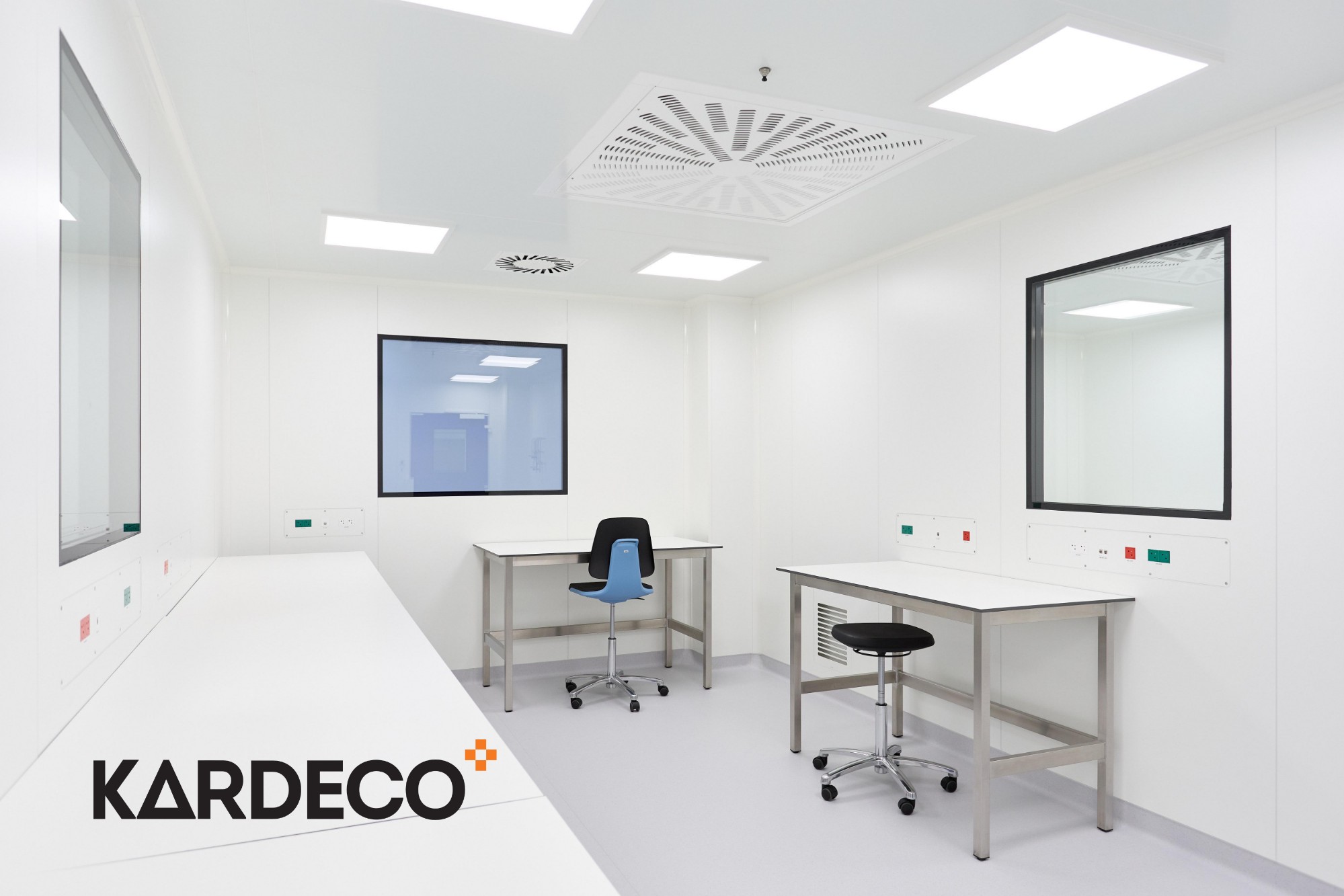
One fixed table height has to serve every operator and every task in a cleanroom or lab. Find out why alternating between standing and sitting matters, and how Kardeco's height-adjustable tables, paired with a Bimos chair, solve it.
Article content
A cleanroom or lab table is used by far more different operators than a regular desk, across shifts and across tasks, from seated pipetting to standing prep work. A fixed table height is never right for everyone, and staying in the same posture the whole time loads the body more than the task itself justifies. In a cleanroom you cannot fix that with your own chair or a stool from home. Kardeco's height-adjustable tables let the work surface adapt to the operator and the task, and paired with a Bimos chair that adjusts right along with it, the seated part of the work is just as ergonomically supported.
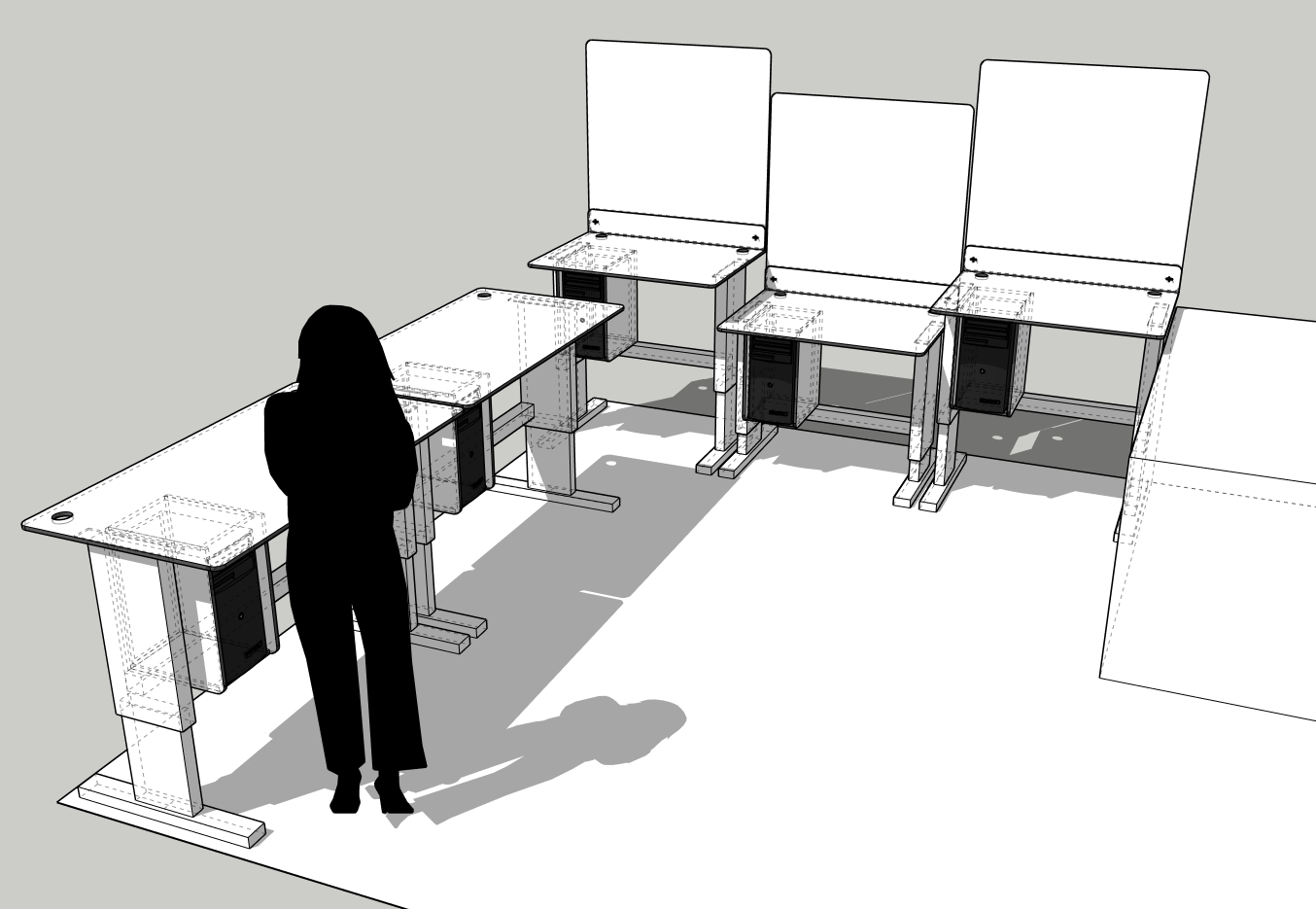
In a cleanroom or lab, most of the attention goes to the equipment: validation, calibration, the protocol. The table that work happens on every day rarely gets the same scrutiny. Yet that table decides whether an operator can work a full shift comfortably and precisely, or ends up in a posture the body was never meant to hold for that long.
One table, many operators, never one right height
A cleanroom or lab table is rarely used by a single fixed person. Across shifts, operators of different heights take turns at the same work surface. A fixed table height is therefore a compromise by definition: too low for one operator, too high for another, exactly right for no one in particular. In a regular office, an individually adjustable desk has solved that problem for years. In a cleanroom or lab, where the table is shared, that compromise weighs even heavier.
The same task does not always call for the same posture
Precision work such as pipetting, inspecting samples or working under a microscope is best done seated, arms relaxed at working height. Preparation work, weighing or setting out materials is often easier standing. A fixed table height forces an operator into the same posture for both, even when that posture is clearly wrong for one of them.
Why alternating between standing and sitting is more than comfort
Regardless of which task is happening at the time, staying in the same posture the whole time is already a problem on its own. Hours of sitting load the lower back and slow circulation; hours of standing load the legs and joints instead. The body is not built to hold one posture for an entire shift, in either position. Being able to switch regularly between sitting and standing, even within the same task, keeps the load distributed and concentration higher for longer, regardless of whether the task itself calls for a different posture. That is exactly why a table that moves effortlessly from sitting height to standing height delivers more than task comfort alone: it makes that alternation possible even when the task stays the same.
In a cleanroom you cannot fix this with something from outside
In a regular office, someone can still soften that compromise with their own footrest or a raised stool from home. In a cleanroom or controlled lab, that is not an option: furniture has to be validatable, cleanable and compliant with the room's GMP framework, not simply supplemented with something that was not made for that environment. The adjustability has to sit in the furniture itself, in the table and in the chair, rather than being added on afterwards.
What a height-adjustable table actually changes
Kardeco's height-adjustable tables let the work surface adapt to the operator and the task, rather than the other way around. Every operator sets their own working height at shift change, and within a single task, the same table switches effortlessly between seated precision work and standing preparation work. The frame and worktop are built in the same smooth, non-porous materials already validated for the rest of the cleanroom or lab furniture, so adaptability never comes at the expense of cleanability.
The table sets the height, a Bimos chair makes the seated work itself ergonomic
A height-adjustable table only solves half of the sit-stand question if the chair underneath it does not move with it. Like the table, a Bimos chair is fully adjustable in seat height, and often in back support and seat depth too, so an operator sits back into a supported posture immediately at shift change or at every transition from standing to seated work, instead of adapting to a chair left set for someone else's height. Paired with the table, that creates a setup where both the standing and seated parts of the task are equally supported ergonomically, not just the standing part because that happens to be the piece that adjusts.
Fatigue is not a minor detail in this kind of work
Work in a cleanroom or lab rarely forgives a moment of inattention. An operator who spends a full shift in a posture that does not fit the task tires faster and loses concentration, and that loss of concentration is exactly where errors in precision work come from. A table and a chair that move with the operator are not a comfort detail, they are a factor in the quality of the work itself.
Want to know how a height-adjustable table, paired with a Bimos chair, fits your cleanroom or lab? Get in touch with Kardeco, we're happy to think through the right solution for your setup.